Biographies

Photo by Alena Darmel on Pexels.com

“No species of writing seems more worthy of cultivation than biography.”

– Samuel Johnson (1709-1784)

What is your favourite type of book to read?

Biographies are a unique type of book. Classified as non-fiction, they are perhaps the truest form of this genre since they are written on the true life of the person lived. 

They give insights into the person we are reading about. Often, though not always, they are a person of influence, prestige, fame, or acclaim. In any case, we picked up their book as they are a person of interest to us. That is, we are interested in something about them—who they are.

As an aside, weddings and funerals are usually the venues we learn tidbits of or insights about a person we otherwise might not have known. This includes the people closest to you, or the one’s you think you know. How often do you leave a Celebration of Life going, “I never knew that about so and so?” These cultural moments provide an interesting way to learn about a person in these large-scale settings.

The insights we read about in a person’s biography give us the narrative (the story) of a person’s life. That is, they provide the past, present, and future glimpses of their life. Often, because the person has passed, we the reader, are given the full survey of their life. “Hindsight is 20-20”, as the saying goes. 

Through these glimpses we learn of their humanness and realize they are just like us. We also learn the depths of the gift they were given. (Why we picked up their book in the first place).

I think the primary reason biographies call to us is that we innately know we are also called to something higher. We are on a quest to figure out what that calling is. Biographies are one avenue of discovering this for ourselves.

Through the bookends of their life, we learn about the story in story form of what made that person them. We get an inside-look into the width and depth of their life. This includes their upbringing and childhood years, early formative relationships, and close friends. We also learn about their discovery of their gift and the unique doors of opportunities it opened for them.

We also hear about their triumphs and traumas, failures and successes, the people who helped them, the points of pain and turning points that forged their being into who they would become. We also discover how they stewarded their gift during their lifetime.

In essence, what we discover is that the individual is a lot like ourselves. This leaves us with hope in whatever stage of life we find ourselves in.

Reading the various parts or chapter’s of a biography is an exercise of mini-sighs as we turn the pages. The goal of reading a biography is to let out a deep sigh once we’ve finished the final page of the book. There, we come to realize we are not alone and that we too have a special gift to offer to the world, and to our world. We breathe in and let out a long exhale to know we are in great company of being surrounded by others. This is in itself a (great) relief.

So friends, what biography will you read next?

On Starting…Anything.

Photo by Ahmet Yu00fcksek u272a on Pexels.com

“Does anyone dare despise this day of small beginnings?”

Eugene Peterson, as translated in The Message, as written down in the tenth verse, of the four chapter, in the book of Zechariah, from the Old Testament (Old Covenant)

Starting a task is actually quite a feat of accomplishment, for us humans.

No matter the task, from the very minute to the very grand, simply beginning something has proven to be something we have all struggled with, at one point or another in our life. 

How do I get started? is a common question we often ask.

Another way we ask this question is, What is the first step?, followed by, What is the next step?, and so on.

We sure are a fickle bunch, us human beings.

I find I am a strong finisher and I actually do enjoy finishing what I have started…once I get started. This goes for pretty much anything I do: getting out the door in the morning, beginning an assignment at school, deciding what to do in the evening, or doing chores, etc. 

Now, I know, I know. There are some people who love starting things. For them, getting started comes naturally. For some of them, all they do is start things. Their lives and desks are full of things they’ve started. And, good for them. That is fine (well, sort of.)

But for those of us, including myself, who do struggle with getting started on things, it can be a maddening and frustrating experience. 

So, what’s going on here?

Well, it turns out, there is a word, or term, for this: task initiation. Huh. Who would’ve thought?!

In broader terms, it refers to the executive functions (EF) that takes place in our brains.

The neuroscience on this is actually quite fascinating. There are around seven – twelve types of EF’s, that include both cognitive and emotional executive functions. Some of these EF’s include: organization, planning, set-shifting (flexibility), working memory, inhibition control, and emotional regulation, to name a few. 

For those people with the strength of task initiation, it comes as no surprise that starting things comes easier for them.

For those of us with the executive dysfunction in this area know all too well the sheer difficulty and challenges it often brings.

Let’s go back to the quote I used at the beginning here. Another way this verse is translated is, “Do not despise these small beginnings, for the Lord rejoices to see the work begin” (NLT).

The big idea here is that God is excited when we begin something, or start at something. Anything, really. It might be something we are passionate about, or it might be something as mundane as doing chores or running an errand. What’s more, you’ll feel better having started that something, too, as it brings with it the reward of inner satisfaction. Either way, it brings both a smile to God’s face and to your heart by beginning whatever it is that you do. 

This verse is also a reminder that no matter how small or humble, or even insignificant, our beginning point may seem, it’s a call that encourages us to persevere. Oftentimes, our greatest barrier is just getting started. However, once we do get started then we’re ‘off to the races.’ 

So, as the saying goes, let’s all ‘keep on keeping on.’ As Martin Luther King Jr. stated in a speech about freedom, “if you keep on keeping on, you can’t help but reach it.”

I’ll finish with the words that Martin Luther King Jr. said in a speech he gave in March 1956:

Freedom doesn’t come on a silver platter. With every great movement toward freedom there will inevitably be trials. Somebody will have to have the courage to sacrifice. You don’t get to the Promised Land without going through the Wilderness. You don’t get there without crossing over hills and mountains, but if you keep on keeping on, you can’t help but reach it. We won’t all see it, but it’s coming and it’s because God is for it. When God is for a thing it will survive. Don’t worry about some things we have to go through. Some of them are a necessary part of the great movement we are making toward freedom. There can never be growth without growing pains. There is no birth without birth pains. Like the mother suffering when she gives birth to new life, we know there is glory beyond the pain (emphasis mine.)

Living Backwards – Part II

Photo by Beyza Erdem on Pexels.com

“Every child you encounter is a divine appointment.”

– Wess Stafford

What I am advocating for is the return to a prominent garden. Eden. The Garden of Eden. Our original home. Our original glory. Our re-made home.

Besides, the most important years of a person’s life are ages 0-5, so why not end with the good years instead of starting with them? Why not “go out with a bang,” as the saying goes? The exclamation point to your life, like the crescendo to Beethoven’s the Fifth. We eat dessert after our dinnertime meal, right? I think this says a lot just in that one acceptable practice alone–despite the magnet on your fridge that says, “Life is short, eat dessert first.”

After all, the most formative and impressionable times a personal being experiences are when they are a baby, an infant, and a child. It is in these early, primitive years that we develop neurologically (and how much do we really know here, in spite of the recent spike of interest in neuroscience??), socially, and emotionally. It is also where we form the beliefs and convictions that govern us for the rest of our lives, whereby our fears, sadness, and anxieties originate from–as well as our primal needs for trust, play, belonging, and acceptance. It is all rooted in those early, unconscious years where most people just sort of overlook this period in a young person’s life, eagerly waiting for the time when they can do things with the child (throw a ball, play catch, go for a bike ride, hit golf balls–you know what you’ve been waiting to do with your own kiddo or someone else’s.)

These are the hallmark times that are crucial to a person’s life and that set the stage for how they will live the rest of their life. In short, this period of time is the threshold point that ultimately determines the trajectory of one’s life. I mean, how much of the pain, wounds, and trauma in your life are from this period of your life–along with the joys, wonder, and the sheer simple and fun times you had back then of just playing and being you? 

There’s a popular saying in the business and education world’s that exhort its people to “begin with the end in mind.” This is what I am talking about here. This is what I am advocating for, as we re-think the sequence of human life. Maybe this is just myth or folklore. Maybe there are some seeds of truth sprinkled within it. Perhaps the world is waiting for the next C.S. Lewis or J.R.R. Tolkien of the 21st century to take this idea and create & develop it into an award-winning, timeless Fantasy series.

But, what if this is more than all of that? What if it stretches past the mythological and enters the very real realm of realism–that what is not only possible, but is also true and ever-real? In other words, it would be our reality and displayed right before our very own eyes. I think this idea would prove to be astonishingly refreshing to the soul. Maybe this is the missing ingredient to our lives, as in the missing piece that finally connects the 1,000 piece puzzle you have devoted innumerable hours to. It would be like a golden key that unlocks the mystery to our heart’s–and our life. And, once connected, or pieced together, the riddle to our life would be discovered and our lives would be properly understood.

Photo by Sonny Sixteen on Pexels.com

Living Backwards – Part I

Photo by Samy on Pexels.com

Children have neither past nor future; they enjoy the present, which very few of us do.” 

—Jean de La Bruyère

I know what I am about to share isn’t humanly possible, nor is it a likely scenario to happen any time soon. So, bear with me as I present these original thoughts and give some insight into my imagination.

___________________________________________

Recently, I have had this recurring thought: What if we could live our lives backwards?

Instead of being born an infant and growing into old age, what if instead, we were born into old age and grew into being an infant or a child?

Essentially, we would take the last day of our life here on Earth and begin our life at that age, and then work backwards; thus, decreasing in our age, still one year at a time, to where we become an infant or zero years old, and then enter the afterlife at that point?

What I am talking about is the complete reversal of human life as we have ever known it.

The normal course of life, from the origin of human history until this present age, goes something like this:

  • We are born as infants – innocent, sweet, and very cute. AND, we are born with everything new – we all have new parts (hips, knees, ears, eyes, back, neck, etc.) In other words, we experience no pain, especially physically. It’s all fresh and brand-spanking new.
  • Then we become toddlers – also adoringly cute (most of the time), still innocent, and incredibly flexible in all range of movements of our body (take for instance, squats – by age 2 or so, this very young mini-human, or mini-you – if you’re a parent, can stand and balance all by themselves, and then simply extend their bottom down, nearly touching the ground – & stay there…for a while. And, what’s more, they can actually stand back up again, no problemo. It isn’t a big deal for them and there is no pain. They can do this over and over again, with much grace, ability, agility, and ease. 
  • Then we become children – we begin to assert our independence and stubbornness, which are big, long words of saying that we really just want to get our own way. Whatever we want, whenever we want. We’re still cute and all that, but it’s the beginning stages of the self-life emerging.
  • & then we enter the teen years – nobody likes this stage (parents or teens.) So, enough said there. Except that lots of mistakes are made here (or, “learning opportunities”), as our identity & self-worth are continually attacked and sabotaged. This era marks our fragile sense of self and challenges our state of being in staying true to who we are (or who we were as children, in the infant and toddler stage, when we were still innocent, wild, and free.) 
  • Adults – which basically encompasses that enormous expanse of time from the end of our teen years to the end of our life. Again, more mistakes, or “learning opportunities”, are made here, with some glimmers of hopes and dreams realized. It’s also the time where the slow and steady deterioration of our bodies takes place over time. 

Doesn’t what I have written and described above just seem so…plain, bland, and, oh I don’t know…boring? It just feels so predictable, like the loud, oversized truck that comes on the same day every week to empty your recycling bin. 

The primary advantages I see for being born backwards are twofold: One is we would have already gained life experience, since we already had lived it, and would know what works and what doesn’t. In other words, we would be able to see and learn from our mistakes. All of them – our failures, mistakes, and mishaps. Those regrets that plague us, & the joy we experienced in those moments daring to live; those missed opportunities, as well as those bold risks; the complex & difficult emotions of guilt, shame, and the inner turmoil (mostly in our minds) we rehearse over and over again, along with the elated feelings of excitement as we start a task.

Second is the redemption of physical recovery and movement. Put simply, it’s the ability to move freely and without any pain. To do those things you enjoy most, and to do them with the people you most enjoy. 

To recap, the two benefits of living life backwards are: Being physically well and being able to learn from our own mistakes. Those two combinations alone would be worth living life in this way. We would have learned everything there is for us to know about life, the world, ourselves, and the people in our world.

Joyful, Joyful

Photo by Donald Tong on Pexels.com

Joyful, joyful, we adore Thee
God of glory, Lord of love
Hearts unfold like flowers before Thee
Opening to the sun above

Joyful, Joyful We Adore Thee
Carrie Underwood

Don’t you love it when a certain song comes to mind, you search it up, and it not only turns out to be the song you had going in your mind, but it’s better?! 

This happened to me recently. 

This past year, on Christmas Eve Day I woke up to a song lyric, a melody, really, put on my heart that cried out, “Joyful, joyful we adore you.” So, I put this line into Google and up popped this song. A very real song. I was thrilled. I chose the one by Carrie Underwood because, well, she has a killer voice. My heart felt deeply satisfied as I listened to this old hymn.

Even more poignant is the season that surrounds this alluring song, and the message it brings forth. I mean, doesn’t hearing the words, “Joyful, joyful we adore you,” cause your heart to quicken a couple of beats?

Anyway, the season I am talking about is Christmas. The unending, build-up towards this magical and holy time of the year; namely, Christmas Eve and Christmas Day. Those special days – the 24th and 25th of the final month of the year – are forever etched on everyone’s internal calendar. It’s because they are one of the few times of the year (other than Easter, and summer vacation) where we can just be still and relaxed.

We can be who we actually are: our real selves. The real me, and the real you. This is what we all innately desire. That’s what we’ve been searching for all our lives – to live at peace first within ourselves and then before others. It seems for those of us on this expansive and elusive search, these times come around only a handful of times throughout the calendar year where we actually allow for and give permission for ourselves to, well, be ourselves. 

Amidst the utter and sheer upheaval and craziness that this overly-commercialized holiday unrelentingly hurls at us, the timing starts early. It actually begins in the weeks before Black Friday, here in Canada. I mean, it is psychotic in nature. If it feels unnatural and inhumane, that’s because it is. But, it wasn’t always this way. 

I once heard it said from a pastor that there are only two things that can heal us: Pictures and music. For pictures, think of all the pictures on your devices, iPhone or otherwise, or the pictures in your memory-mind of those well-spent days and weeks of utter bliss and unending happiness you got to experience. From a holiday, a wedding (your own, perhaps), a dream fulfilled, a longing satisfied, a goal you set out to achieve and actually accomplished, or any of the special backdrops you spent with family, friends, or loved ones and the Eden-like experiences each of those brought you.

And music, well, that’s what I’m really talking about here. Just think of any of the times you heard your favourite song or artist on the radio, in a movie you were watching, or on the playlist on your phone’s preferred streaming platform. These songs come to us in a hundred different ways. And they are all calling out to us, saying something important to us whether we are perceptive of its meaning or not.

One of the things I appreciate most about this song is that it puts into words the very thoughts I have been thinking and emotions I have been feeling. Of course it does. Music has a way of calling this out from the deepest centre inside each of us. One example is the line:

Drive the dark of doubt away
Giver of immortal gladness
Fill us with the light of day

My mind, or my heart, really, at times seem to be clouded over by doubt, as if the big decisions in my life can be likened to me trying to walk atop a fence line in a straight line. I mean, I can feel the doubt creeping in which makes me feel as surefooted as walking in a London fog. 

Moreover, this song is a call that reminds us that it is God, in his triune being, that is the ultimate Giver of Life. Only he can produce in us the enduring gladness, or happiness, and the light we need as we travel along our own life’s path.

This song was originally written as a poem, entitled “The Hymn of Joy,” in 1907 by Henry van Dyke. The inspiration for writing it came from the Berkshire Mountains while he was staying as a guest preacher at the home of Harry Augustus Garfield (son of US President James Garfield), who was the President at the time of Williams College in Williamstown, Massachusetts.

van Dyke said this about his poem:

“These verses are simple expressions of common Christian feelings and desires in this present time—hymns of today that may be sung together by people who know the thought of the age, and are not afraid that any truth of science will destroy religion, or any revolution on earth overthrow the kingdom of heaven. Therefore this is a hymn of trust and joy and hope.”

I really appreciate his comment about hope. The song and its message are eternally hopeful. For me, it gives me hope in the forward movements of life. 

Singing with the voice of an angel (as do all our favourite artists), Carrie Underwood delivers an exceptional performance in delivering this multi-meaning hymn-turned-song, for our times.

The Impacts of Light

Photo by Rodrigo Burgos S. on Pexels.com

“Darkness cannot drive out darkness; only light can do that.”

Martin Luther King Jr.

Light’s impacts are everywhere around us. They can be perceived in both the seen and unseen world’s, and its effects on us are numerous. Here are some of them below, in no particular order:

Light brightens us – within us and all around us. 

Light changes our countenance, our perspective, and our own way of seeing things.

Light also changes our inner world which then transfers to our outer world. That is to say, the light within us transforms us. 

And that’s the point: it illuminates. 

Light dispels any and all darkness. Light and darkness cannot co-exist together for they are both diametrically opposed to each other. When light enters a room the darkness has to flee, it must go. Just try turning the lights on in your living room when the sun has long past gone down.

In other words, light commands and darkness obeys. When light enters, the darkness has to go. 

Light opens us up, like a flower that is well-taken care of by its owner. This light frees us up, allowing for our own unique petals to take shape and blossom. Along the way, it gives us permission to be our own true, authentic selves. Light, in this sense, is a liberator. It liberates the captive from anything that is not holy or founded on truth.  

On the other hand, darkness keeps one captive and enslaved, shrivelled up and afraid to open up, like a dying flower that has been neglected from the love and warmth of its gardener. Darkness is a restrictive, suffocating, and terrorizing force. Stated another way, darkness is death and it can be likened to an avalanche that consumes and destroys everything in its downward path. At its core, it is pure evil for that is its motive and intent. In this way, light is love and darkness is hatred. 

Light is also life. It is like the warm sunshine that caresses your face on a blue-skied day. Its warmth is both inviting and welcoming. The warmth on our sun-lit body reassures us that there is still goodness coming our way – in us, for us, and through us. This light is an embracing presence and its wholesome presence is always embracing. The sun’s rays literally changes us inside, in our heart. It is what our body, soul, and spirit most profoundly need. 

In our own light is where we find our own freedom. And, it is where other’s can discover their own light and freedom.

Like the shape of a diamond, the impacts that light has on us all are vast and incomprehensible.

Light!

“In him was life, and that life was the light of all mankind.”

John 1:4

Light is all around us. We simply have to be aware of its presence, within us and all around us. One of the ways of looking at light is from the past, present, and future.

Light has come. Indeed it has, this past Christmas season and in the new year ahead. Light is everywhere: Christmas lights, lights on our Christmas tree, the ornaments we hang on our tree, the light in the little children’s faces, our loved ones on Christmas morning and the big day’s festivities. Even at night, just by turning on the lights in our homes, the light invades and pervades the very rooms we occupy. In short, light brings visibility to everyone and everything it touches.

Light has already come. It has already existed before our time and before time began. Light has always been there, without our being conscious or aware of it. Like the sun, it has always “been there.” Light exists in many different forms. Some of them are the sun, the lights in our homes, our exterior lights, another person’s smile, the countenance on their face, the brightness of a family member or friend’s eyes, as well as the light that exists inside each of our own hearts.

And, light will continue to be among us. I mean, of course it will be! Where would we be were it not for lights? Can you imagine a world with no lights in it?! It will also be among us for the rest of this new year ahead. And…forevermore. This is because light is perpetual; that is, its very existence means it is both on-going and eternal.  

This is a new year. 2023. 365 days of this prime-number year. Let the light in to your own soul. Go and get some sunshine and be the warmth of the sun’s rays for someone else in your world. 

Summer of ’20

The Bow River, with Baker Park & Bowness Park on either side.

“Live in the sunshine, swim the sea, drink the wild air.”

Ralph Waldo Emerson

“A little bit of summer is what the whole year is all about.”

John Mayer

“If you’re not barefoot, then you’re overdressed.”

Unknown

With the arrival of summer, do you have any plans for this summer?

51 years since the inception of that famed “Summer of ’69” song, may it be said and remembered that this summer was our summer.

This seasonal season has been greatly, long-awaited for, like the joyful anticipation of the awaiting during pregnancy. This is especially true of us who live north of the 62nd parallel. It’s where much of the last eight or so months have been lived enclosed in an ever-increasing, gruelling, and gloomy climate of winter. True, this year for us hasn’t been as bad as winter’s past, even without seeing a tremendous amount of that white stuff. It still seems far too long since seeing that good ‘ole green stuff. 

So, what are your summer plans?

In the midst of a much-needed and called-upon easing of restrictions, in the hopes of getting back to “normal.”

Remember that word – or time? It wasn’t that long ago, or so it seems.

Anyways, back to the joys of summer.

A few questions for you to ponder and reflect on and jot down on some paper:

What hopes do you have for this summer?

What dreams do you have for this summer?

What ideas do you have for this summer?

Take your time here. There is no rush. It is something to think about and consider upon, during any amount of time you can spare (which we all have plenty of these days) from when the sun rises or sets. 

The idea in this exercise is to simply awaken your heart and to increase the joy-bomb within your heart. To generate longing, to put it another way. 

The purpose is in the anticipation of goodness upon your soul. Think of it as an opportunity to shift and change your focus in this political and economic climate, like a sailboat changing its direction to go with the wind at its back…and to really let loose and just go!

It’s an invitation to invoke the tangible and the real; to create the memories that will undeniably sustain us through the next winter months ahead.   

When the golden colours of fall skirt across the lake, will you be content leaving summer in its wake?

Summer flowers in bloom at Baker Park.

“Summer afternoon—summer afternoon; to me those have always been the two most beautiful words in the English language.”

Henry James

“Rest is not idleness, and to lie sometimes on the grass under trees on a summer’s day, listening to the murmur of the water, or watching the clouds float across the sky, is by no means a waste of time.”

John Lubbock

“In early June the world of leaf and blade and flowers explode, and every sunset is different.”

John Steinbeck

The Sweet Spot

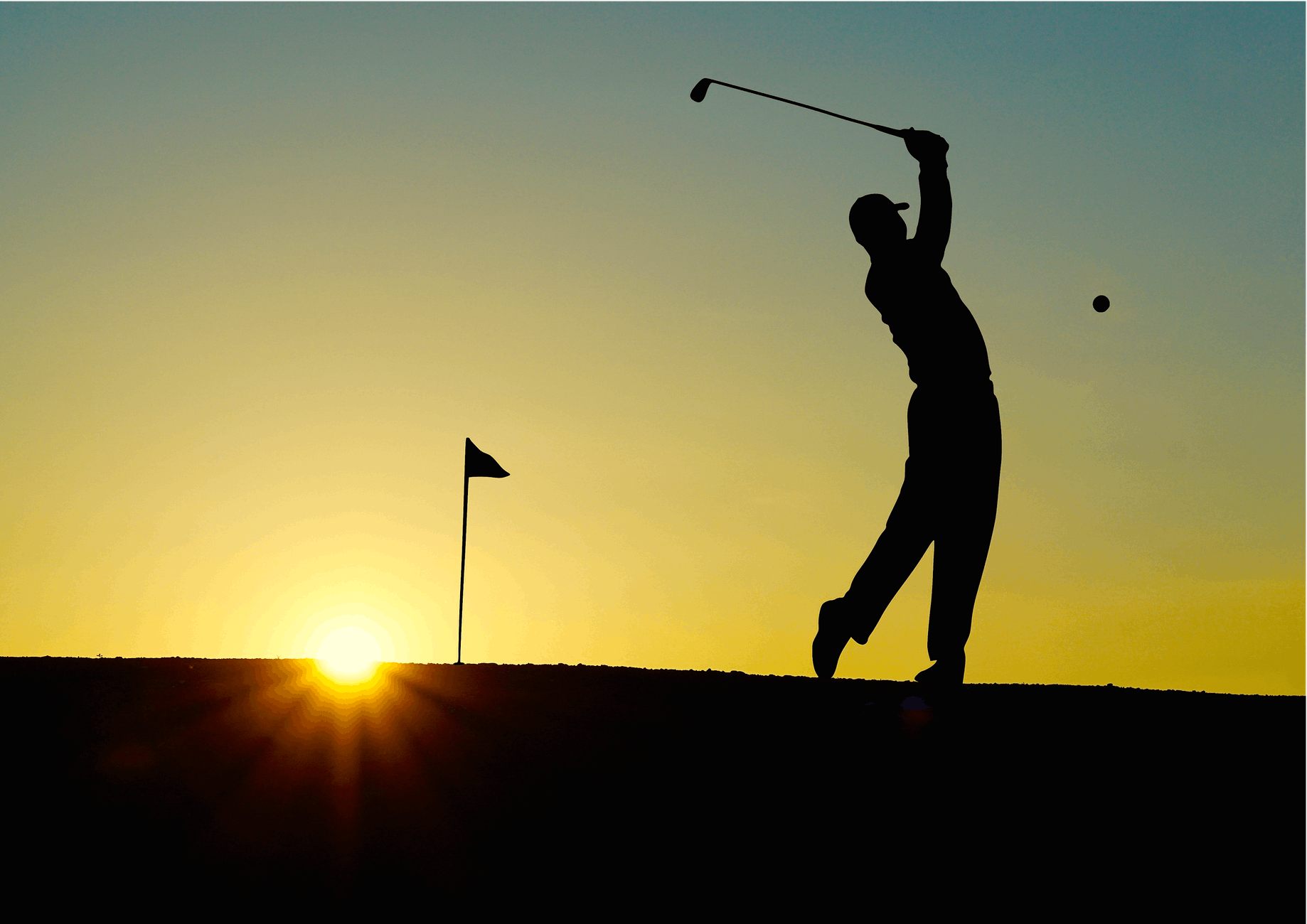
Photo by Pixabay on Pexels.com

[T]he plan today was just go out and do my best for 18 holes. That was my thought throughout the day — just keep doing my best. Do my best.

Hideki Matsuyama, 2021 Masters Champion (1)

That sweet spot on the club face. Man, oh man!

That is what keeps us all coming back to this game of golf.

Just to be clear, (as if I really need to say this, right?) the sweet spot is hitting your golf ball in the dead centre of the golf club you are hitting.

Often, just hitting it once during a round of golf (9 or 18 holes) is enough to keep anyone coming back to the course and to try and do it again.

There are many feelings we experience when this happens. It’s: exhilarating and exciting; fantastic and phenomenal. Simply put, it is pretty sweet. Oh yes, it sure is!

This type of experience, in my opinion, is right up there, if only just a little bit behind, the ultimate gaol of getting a hole-in-one for any golfer.

True, the odds are much better at hitting the centre of the club face than the other, but the sensation is essentially the same. And I believe that it was designed for this purpose. Golf is a lot things; however, singularly, it is this experienced feeling that heightens the drama and enjoyment of the game. I for one am testament of this.

Hitting the sweet spot feels about as elusive as it does to actually hit a hole-in-one. In that, one can’t predict when it will happen or if it ever will during the course of play. There seems to be no aspect of planning or timing for these events to coincide. It just happens. And then, it’s over. About as quickly as it came. And then we move on to the next shot, or hole, looking to repeat the same shot-feeling as before. For most of us, we soldier on, for what feels like and can actually be quite a disparity of time.

Because golf and life seem to be so interconnected our ultimate aim in life is to find our own sweet spot. That is, to find our groove for that one thing that keeps us coming back to live our life well; both consistently and day-after-day. There are many words used to describe this, such as passion, calling, gifting, etc. Above them all is our concerted effort to discover and then do what we were created for. To achieve our purpose, in other words. That is the ultimate shot in life — for yours as it is mine.

Notes:

(1) https://www.masters.com/en_US/news/articles/2021-04-11/matsuyama_carves_his_place_in_history.html. Accessed April 18th, 2021.

Tectonic Shifting: A Reflection of Our World Today

Photo by Naeblys on National Geographic

Though the theories of plate tectonics now provide us with a modus operandi, they still seem to me to be a periodic phenomenon. Nothing is world-wide, but everything is episodic. In other words, the history of any one part of the earth, like the life of a soldier, consists of long periods of boredom and short periods of terror.

Derek Ager

There is one word to describe the madness of the world we find ourselves living in at this moment in history: Collision.

This is what living in the chaotic world of post-COVID feels like. Collisions, of various kinds and at various levels, seem to be occuring at an accelerated pace. It looks an awful lot like a collision of kingdoms continually colliding with one another. The kingdom of darkness competes against the Kingdom of Light in a fight for good or evil in the hearts of men and women, both individually and as nation-states. It sure feels at times that the darkness seems to be winning.

Yet, there is nothing new here. Just take the films and movies since the dawn of Hollywood and you’ll see these persistent themes evident in each film you watch. Take Netflix for example. The various tiles of shows and movies vying for your attention all have one thing in common: a hero and villain archetype. It seems so obvious that we almost overlook this profoundly simple fact as we scroll through in selecting and adding to ‘My List.’

By way of analogy, these constant collisions in the unseen world I spoke of earlier (i.e. the heavenly’s) are like the tectonic plates that have shifted over “millions of years”, as I learned in my elective University Geology course. Huge, enormous rock structures collide into one another, as they battle for power and for ultimate control, amongst the earth and her seas. After all, that is the goal. And its effects are felt mightily and intensely.

I get it: I’m an (older) millennial, and unlike the Boomers or The Greatest Generation before them, I haven’t lived through other very real threats and extremely difficult, trying times such as: Two World Wars, The Vietnam War, the Spanish Flu, the Great Depression of the 1930’s. Prior to this pandemic, I have only really lived through the recession of 2008 of the U.S. Housing Crisis and the subsequent foreclosures by banks. But that was America, not Canada, right? And I suppose a few recession cycles from our single greatest industry of Oil and Gas out here in the West. Oh, and 9/11, as brutal as that was, not to underscore this event or any of the others I have listed here (and perhaps forgotten to include as well.)

But this one feels different. It hits closer to home. Yet, its effects are much more elusive, as if I’m trying to collect sand with my hands from the bottom of a lake. In other words, the world and all its current changes are cataclysmic and it feels otherworldly as a result of the unseen shifting of tectonic plates in our world today.

Dwight N. Van Middlesworth

Personal Blog

Skip to content ↓