Quest Element’s

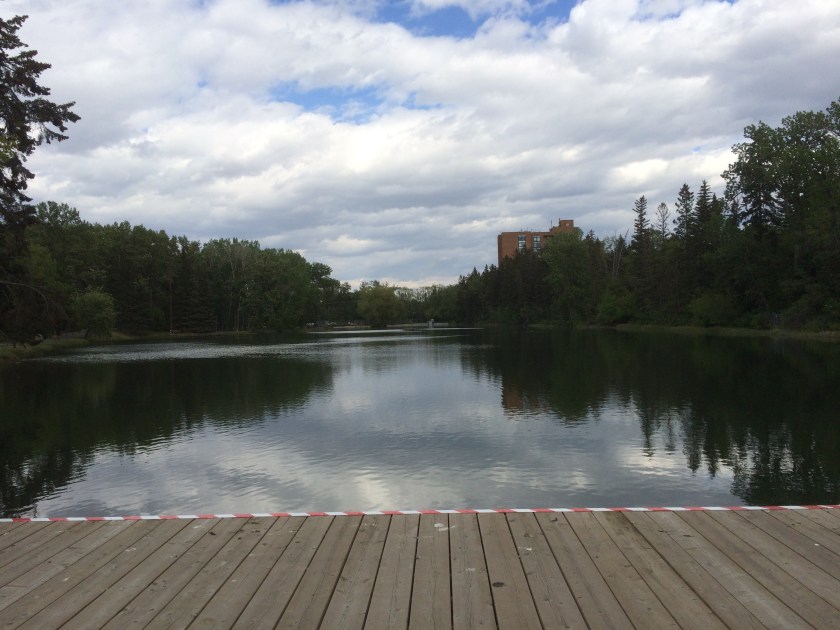
IMG_2089

Photo taken by the author
At the newly-renovated Bowness Park lagoon; Calgary, AB

“If you want to build a ship, don’t drum up the men to gather wood, divide the work and give orders. Instead, teach them to yearn for the vast and endless sea…”

– Antoine de Saint Exupery

In any search we encounter, I have noticed there seems to be different elements to it; three to be exact. They are stages that are staged along each stage of our journey – signposts, if you will – that are helpful in navigating our path along it. Like any great story, there is an enticing beginning, an intriguing middle, and an engaging ending.

The first element is motivation. Simply put, we need it to get going and to get started at something. What’s the spark, the trigger, or the idea to begin that thing on your mind? To start at something means we are motivated to do it in the first place. For without a sense of motivation, why bother at all? There has to be a desire to do the thing we have set out to do. Did someone inspire you to do it? Is it an inner prompting? A goal you’ve set for yourself? A long-awaited “bucket list” item? To break the word down, ‘motivation’, what is your motive for doing it?

Next, is inspiration. Once you have gained the motivation you then need the inspiration to keep going. That is, the determination, perspiration, and persistence to keep on going, throughout the process. Challenges will come and with it the need to keep plugging along. What inspires you? Is it a picture, a quote, or a belief? If so, write it out and put it in front of you so you can see it while you work away. We all need proverbial carrots out in front of us to get us to the next point, and the next one after that. Recognize this and recognize what your’s are.

“Instead of sailing off into the sunset, he hopes to sail into the next century.”

– Dave Anderson

The final element is hope. When you’re inspired by something you have a reason to keep doing what you’re doing. In other words, hope propels you forward, no matter what obstacles you encounter along the way. Hope is one of life’s greatest gifts, for it is the engine that fuels the aliveness of one’s heart. When you have hope, nothing will stand in your way. When you receive hope, take it in for all that it is – for as small as it may be, it becomes the rudder that charts your ship where it is purposed.

In summary, any decided journey that is so dared undertaken is secured by the bookends of motivation and hope, with inspiration being the glue holding it all together.


Life Strength’s

IMG_1981

Photo taken by the author along the Ghost River, AB

“Each person’s greatest room for growth is in the areas of his or her greatest strength.” 
– Now, Discover Your Strengths

Travel is also a discovery into who you are and who you’re not. Through all the facets of travelling, you learn valuable insights about what you’re good at and what you’re not. In the before, during, and after stages of a travelling adventure, and everything in between, you come face-to-face with what your strengths are and those areas you may prefer not to do. It can be an interesting awakening into learning more about how you are wired and what parts of the travelling project experience you enjoy more than others. Maybe it’s the research process and you love finding out everything about a certain place you’ll be visiting, or it’s developing a plan for what to do and where to go, or telling all your friends (and strangers too) about your exciting upcoming trip. Or perhaps it’s taking as many pictures as you can on your trip in trying to capture as many of the amazing memories in digital form to take back home with you, or it could be you’re the spontaneous type and prefer to just “show up” and see what happens. Whatever your bent is, the fact remains that you learn the facts about those parts of you that come most naturally to you.

Becoming aware of those traits or skills that you aren’t good at gives further insight into who you are and can be quite helpful for future endeavours, travelling or not. These are life skills and awarenesses you learn about yourself and you take them with you wherever you go and in whatever you are doing. In effect, they become transferrable, as you can lean on them and learn by them in which ever environment you find yourself. The idea of learning what you’re not good at is to be able to focus more deliberately on those areas you are great at, while not getting bogged down in the few area’s that don’t come quite as naturally.

Let me explain with an example. When I was preparing for my trip to Europe a few summer’s back, I had no idea about where I would go or what route to take. Thinking about the order of the countries I wanted to see, along with all the other necessary travel arrangements (such as accommodations, travelling, food, etc), was exciting for me but also kind of stressful, as I’ve never been there before. All I knew was I wanted to see as much of Europe as I could in as short a period of time. So, I went to a travel agency and decided to go with a tour group where all the details would already be figured out. Once I chose the tour group, with the advice of my travel agent, I could then focus my attention on choosing what trip and the length of trip to go on. All this information was in the company’s tour magazine and pretty soon I selected the trip I would go on: a 5-week trip to nineteen European countries. Knowing that the travel details were in place was a great assurance to me, and once I had that settled, I could use the rest of my time to excitedly prepare for this trip of a lifetime.

Know Thyself Through Travelling

IMG_1733

View from Lake Louise Ski Resort
(photo taken by the author on an iPhone 5s)

“The greatest explorer on this earth never takes voyages as long as those of the man who descends to the depth of his heart.” – Julien Green

Travel is the best kind of education for learning about yourself. Let’s face it: we are all “set in our ways”, to a certain degree. Travel blows this distortion out of the water. Like a meteor falling from the sky, so is the explosion this effect has on our way of being. We are shaken to the core and are forced to deal with who we are and who we’ve become. In this state we become open to learning things about ourselves that we may not have been otherwise. The irony of course is those who know us have seen and noticed these parts in us for a long time, so this new information we have become aware of slowly comes to the surface as we reach a new level of awareness. As the saying goes, “awareness is the first stage for real change to occur.”

In the process of learning new parts about ourselves we discover new things about those around us, both abroad and at home. We also gain insightful information about the world in which we occupy a small space in it. Another way of stating this is, as we gain insights about the world and people around us, we reach new heights of understanding about ourselves, our behaviours, thought patterns, and ways of relating to people and events. This is incredibly helpful and useful because this process of learning more about ourselves, and the world around us, leads to acquiring newfound teaching’s in real-life, in real-time, and in real-life discovery.

The journey of traveling has in itself learning’s that no classroom can ever teach us, for it impacts us in the raw and tangible way that walking on distant streets and distant shores can only reveal. The terms “street smarts”, or “learning on the job” come to mind as a communicative effort to put into words what I am talking about. Through the course of travelling we gain an A+ in the study of exploration. We come back far more educated, in so many different areas, than we were heading in. If you are looking for an Ivy-League education, seek not the prestigious campuses of Stanford or Harvard; rather, seek to travel in any part of the world that is not your own and create your own campus.

Why We Travel

13

Photo taken by the author of the Kananaskis Country mountain ranges

“Travel, in the younger sort, is a part of education; in the elder, a part of experience.”

– Francis Bacon

For those who are afforded the opportunity, and luxury, really, of being able to travel – near and far, across distant oceans, lands, and continents; beyond one’s familiar realm – the eyes of the traveller has seen what no words can accurately capture. The act of going sets in motion the various explorations, exhibitions, and encounters one will experience on the expedition. In the midst of one’s travels, we feel within a part of ourselves something not felt before, we see distant, yet nearness of sights, and we learn to think in a way no events prior could have prepared us for. Being speechless about our experiences means the journey has reached a part of the subconscious we didn’t know existed.

We have been given the gift of sight, and travel is one of the most clearest explanations and expressions for this sense. Everywhere we look – from the bustling airport, out the windows of our plane, to landing on foreign grounds, on our group tours or private excursions, to “me time” beach time, even in gathering our provision of food and drink, all of it – our sensory apparatus is taking everything in because of its surreal nature. As our eyes become enlarged, so our mind grows new synapses of electrical signals, and in direct proportion, this weighty and powerful intellect that sits at the top of our frame, expands as well. The fresh visions we see have to be stored someplace, and so, on to the mind these images go. They are contained in our mind’s eye for reflection at a later time, providing warmth for the soul, and the living proof that convinces us what we have just seen is actually real and it did happen.

In travel we experience a whole new kind of search. One of the primary reasons we do travel is because we are searching for something; whether we are aware of it or not, whether what we are searching for is known or to be known. TBD, I think would be the expression for this. Both these terms, travelling and searching, in effect become synonymous: we travel for a search and we search for travel. What’s more, we are hoping to peel off one more layer of the mystery of life when we travel. This is so because travel unveils a whole new way of perceiving the things around us in general, and the events of our life, in particular. It is this revealing we are yearning for most during our travelling adventures. In the process of time and travel, we gain greater clarity than we would have if we were sitting in a counsellor’s chair back home. Some explanations into who we are and why we do what we do require, or demand, a passage to be taken.

Searching for the Sake of the Search – Part 2 of 2

IMG_1107

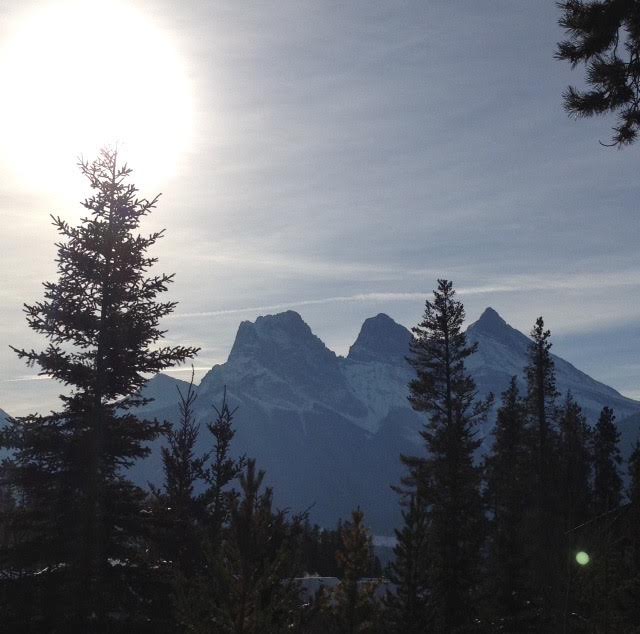
Photo taken by the author; Three Sister’s Mountain Range at dusk; Canmore, AB

“Every search begins with beginners luck. And every search ends with the victor being severely tested. The boy remembered an old proverb from his country. It said that the darkest hour of the night came just before the dawn.”

– Paulo Coelho, The Alchemist

A helpful guide at this point would be to say that a person’s search changes throughout their lifetime. There are various seasons, or stages, that we as human beings inherently go through as we live life. Aren’t you glad you’re not stuck as an infant for the rest of your life, spending your days wearing diapers, crying as your lungs maintain a full-capacity level, and unable to speak a coherent train of thought?

Each stage of life reveals different searches, each presenting themselves with different opportunities and challenges. It is during each stage where we can experience different passions, interests, priorities, or goals than the previous stage. New ones take centre stage while older ones move backstage as the curtain comes down. To illustrate, what a young adult is searching for in their twenty-something is radically different from what our parents are searching for. And that is much different than what our grandparents are looking for.

Like the economic cycle, our life can best be viewed, or understood as, in cycles. Sometimes life for us is on an up-swing while other times it seems to be going the other way. Yet, these cycles seem to take place within an equilibrium, where our lives are constantly being brought back into balance, to be centred. Just take a moment and reflect back over your life, or even this past year, and observe the various waves you have had to ride through.

“When you want something, all the universe conspires in helping you achieve it.”

– Paulo Coelho, The Alchemist

Different stages of life present different goals a person sets for themselves. Each of these goals offer different motiving factors for what a person wants in life at a particular time. There are plenty of ways this “search” can be categorized as: meaning, purpose, career, faith, lifestyle, a soulmate, a spouse, dream vacation, travelling, friendships, acceptance, hope, love (and all the various kinds of love that there are), a sense of belonging, and accomplishment, to name a few.

As the saying goes, “The journey is more important than the destination.” And searching, of all the types and kinds that exist, is a journey – in fact, it may be one of the most important journey’s we take in life. Still trying to understand the logic in this, for me the process has in it more significance than the end goal or the accomplishment of our desired endpoint. I think this is because both the fun and the learning take place in the journey.

After all, life is an adventure and it isn’t the arrival or the destination that brings life – to either the search or the searcher. The thing about each of us is we are evolving creatures. In fact, our world and everything in it is in a constant, changing, and continuously evolving state. Nothing is static; rather, it is dynamic. That is the nature of the search.

Searching for the Sake of the Search – Part 1 of 2

31

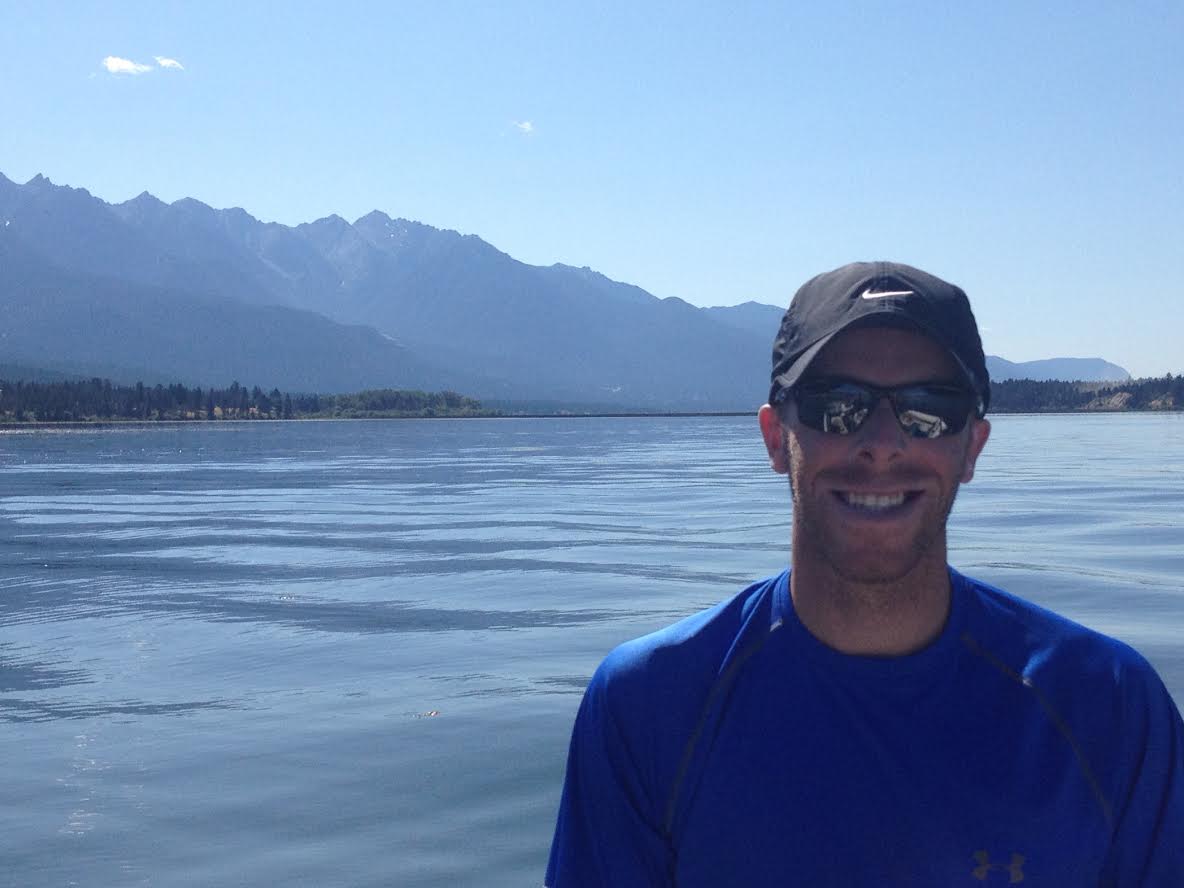
Photo of the author taken by Dwight Van Middlesworth, Sr., on Lake Invermere, B.C.

“I still haven’t found what I’m looking for.”

– Bono, U2

What are you looking for?

As we navigate our way through what appears to be, oftentimes unchartered territory, it can feel like our clarity is the equivalent of trying to identify the mixtures through a clear glass of Coca-Cola Classic combined with 2% milk. Even with our proverbial compass in front of us we still don’t know which way is due North.

The feelings that can accompany us during these searching moments aren’t necessarily the ones you want to re-live, as some kind of encore emotional performance. Along the way, as we have within us the aches of our heart for the yearnings of life, what we are really looking for is someone to just listen to us. A trusted companion to hear both our pain and our aspirations. We need hope so we go looking for it, in a personified way.

This searching is actually a hunt for the void places of our soul, where often all that stands between now and then – the fulfillment – is simply time. Each of us is on this search as we want to keep growing. We innately want to grow our ourselves, our character, our knowledge, our abilities, alright you get the point. For to not be searching would be to be settled and we as the human race have a very difficult time being settled, with pretty much anything in life. We are restless creatures, evermore continually and continuously on a restless and relentless journey. As ironic as it may sound, this is where we prefer to be – in the action.

Even so, sometimes in life we get stuck and don’t know what to do or where our next step should be. My pastor has once said, “It is easier for God to move a ship when it’s moving out at sea than when it’s anchored at bay.” I feel I can relate to this analogy and have discovered the truism in this saying: in order to find direction in one area of life, the starting point is to get moving, in any direction – even if it’s backwards. The point is to be in motion and out of that, with our sails up, so to speak, God can direct us and lead us for where we are to go.

Through this process of determining the next step for myself, circumstances have somehow aligned themselves in such a way that I’ll hear some lyric from a song on the radio that pops out at me while driving, or a verse will stand out to me when I’m reading the Bible, or a friend will say something that stands above everything else I’ve heard during the course of the day. As a result, l will have gained the clue to what I was looking for that helps determine what the next step is or it may even be the final piece of the puzzle that is needed to find what I was looking for.


What to Write When Writing a Written Work

19

Photo taken by the author; Three Sister’s Mountain Range; Canmore, AB

“Writing is something you do alone. It’s a profession for introverts who want to tell you a story but don’t want to make eye contact while doing it.”

– John Green

Here I sit, on a late Thursday night, with my Macbook open, ready and willing to work on a blog post I’m writing (this one, for example.) I think to myself, as I have often thought before, “What do I write about?” or “Where do I start?”

I look at the word count on the footer of my page and it shows: 12 words – mostly consisting of some random thoughts I’ve jotted down. In one way, it’s exciting as I have a couple of ideas to work with as I create something out of nothing. In another way, it feels overwhelming to be staring literally at a blank screen trying to first pick a topic to write on and to then follow a specific train of thought in producing a 400-500 word work.

As I write, I am left to the few devices of a laptop and the ideas that bloom ever-so-brightly in my own mind. I think to myself, “Where am I going to get the ideas, let alone the words, to fill all this empty space with some sort of substance?” You know, the good kind that people will actually take the time to read and thoughtfully think about, and perhaps even take to heart. At times I feel I don’t really have much to go off of, except for an aspiration to write something meaningful, something worthwhile.

My goal in writing is to be authentic. That is, with the topic I have chosen and how to go about communicating it. Being authentic also means expressing something that is honest and real to me and that people can relate to and connect with. After all, we’re human being’s living a shared journey, in many respects, and one of the key benefits that writing affords is to capture these similar experiences we all go through in a written format – for the purpose of being read, reflected upon, and shared amongst others.

In keeping with authenticity, this task has proved to be rather difficult and challenging for me. One reason is that it can feel as if I’m laying myself bare before a reading world of the Internet sensation. Being honest takes guts. It would be easier to write on something that someone else has already said or to write about current, contemporary, cultural topics – the kind you hear everyday. But then, how boring would that be to listen to the same old song?

All this to say, it’s a work that can seem pretty daunting at first. At times I feel lost, like a hiker in the Rocky Mountains without a compass, guide, or map, and the sun setting rapidly over the Western landscape. At times I wonder, “Will people even read what I have to say?”

Yet, the process is pretty incredible when reflected upon: an idea comes to mind, words are then transferred on to a page, then edited (many times over, that is), and then published to this blog site – all to sit before someone else’s eyes to gaze upon via any number of technological devices (whether a phone, iPad, tablet, or laptop) in any type of setting (on a lunch break, in between meetings, in the evening, at home, in the bathroom, or before bed.)


The Crippling Effect of Loneliness

22

Photo taken by the author; sunrise over a silhouetted NW Calgary neighbourhood 

“To be yourself in a world that is constantly trying to make you something else is the greatest accomplishment.”

– Ralph Waldo Emerson

Upon what do you find meaning for your life?

What are those things you do, go to, or look for in order to find some sort of meaning in your life? You know what I mean: those idiosyncratic, impulsive, and compulsive habits you venture towards to contrive a sense of meaning and purpose for yourself.

Everyone these days, as in days of past, is on a quest for discovering meaning in his or her life. That is, both for the short-term and the long-term. We want to be significant and do things of significance for a significant reason. When our temporary, fleeting time on Earth is done we want to have contributed towards something that bears the mark of a life of significance.

People who know me know I don’t fare well with surface-level areas, but rather am drawn to and inclined towards deep and meaningful aspects. The kind that has an aura of permanence to it and sticks like concrete cement. I need things that last, that hold, and that matter. This is important to me – it’s who I am. For even though I do change, and that will not change, I am growing and learning new things all the time about myself, others, and the things going on around me.

Of course, the disappointment and frustration (along with a host of other dark emotions) comes when we don’t discover the meaning we were hoping for. Of all the human emotions one can feel in their lifetime, the worst one I have determined to be, after much contemplation, reflection, and experience, is loneliness. There is no other human feeling worse than this. Nothing can compare to it for nothing is as painful as it. And it sucks. Deeply.

When you are alone, it plays with your mind and you are capable of getting all those negative and distorted thoughts, often about things from the past or imagined scenarios about the future. All in all, it isn’t helpful or healthy.

I know this is not just me and that I am not alone in this one. It’s a horrible, miserable feeling and I wouldn’t recommend it to anyone to experience; yet, we all go through this from time to time. No one is exempt and there are no favourite’s or exception’s to this part of the human, fallible condition.

Have you ever been in the middle of a crowd and suddenly you feel all alone? That’s what I mean. Or, have you ever been alone by yourself, without intention, like getting lost in an unfamiliar place? That also counts. Here’s another one: being stuck all alone on a Friday or Saturday night, hoping and desperately wanting to get together with someone – anyone. At any rate, it all contributes to this very unpleasant feeling and experience of being lonely.

To be alone is by far the worst of the emotions known to mankind. It goes against our natural tendency to not be surrounded by people, for it is in community that we are known, loved, and supported. It goes against the logical mind, for we intuitively know we are not meant to go through life alone, or at any point in between.


The Reason for Which We Are Born

16

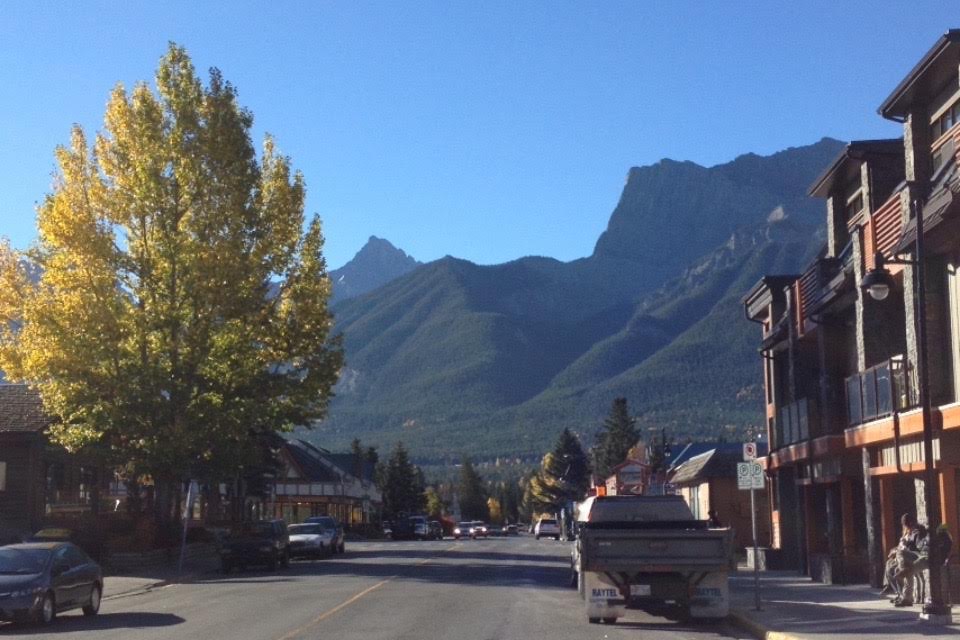
Photo taken by the author in Canmore, AB

“The two most important days in your life are the day you are born and the day you find out why.”

– Mark Twain

For the above quote I’ll make a blanket assumption here, you know, just step out on a real limb: If you are reading this blog, you have been born, physically speaking. I don’t mean to undermine this event as this quote states it is a very important day, the day you came into this world, and I agree.

So, at this point, we can all say: “Check, done.”

It’s that second most important day, “the day you find out why”, that can prove to be rather difficult for most people in checking off. This is not just true of our culture today but this quest runs deep down through the ages. People, from long ago and today, are constantly asking themselves: “Why am I here?”

Why else do you think there are jobs for counsellors, psychologists, pastors, chaplains, etc? It is this very question that provides employment and income as a global population seeks out answers for this trivial question. It’s a very important question to ask yourself and to keep on asking until you’ve found an answer.

The line after this quote says: “The second day is the day you learn to fly.” Have you ever seen an eagle fly? This is how I imagine it to be like when a person finds out the reason for their existence.

Our family has a ski boat and one of the places we love to go boating is on Lake Windermere, in British Columbia. Towards the south end of the lake there is one particular tall tree on the banks where an eagle or two can be spotted sitting on its branches. The eagle in this area was first spotted by my dad several years ago and we look for them each time we cruise by.

What I’ve noticed about watching these majestic creatures is they often fly high in the sky, higher than most other birds, and their wingspan is ginormous. Come to think of it, I don’t think I’ve ever seen an eagle try to fly or work hard at flying. It’s kind of an oxymoron.

They hardly have to flap their wings, yet their motion and movements appear to be effortless, like nothing at all. They can cover great distances expediently. Other times they are just gliding in the sky, barely having to move their wings with great exertion. They look peaceful in that large expanse, at rest, marked by stillness and just being who they naturally are.

This picture is what it looks like to me to have found one’s purpose. It illustrates the reason for why God made me and placed me here on this earth, at this particular place and time in history. When you find out why you were born everything just makes sense and fits together, like pieces in a puzzle.

Do you want to fly?

I know I sure want to.

To be honest, I haven’t found out or discovered why I was born. Pieces of it have come together over time, but I am still on a search for this. This blog for me is about searching and as the one writing this post, I too, am searching for a number of things, including this big one. In a way, this is partly why I’m writing these thoughts, to see if being an author and a writer is one of the reasons for which I was made. I don’t know yet, but the search is underway. I do know that one day this journey of discovery will be revealed to me.

And the same is true for you. You will discover why you were born and you will fly; in fact, you’ll soar. So, in the meantime, keep on doing your thing, keep having hope and keep clinging to the Giver of Life. He will reveal it to you, in due time.

Greatness as a Way of Life

33

Photo taken by the author; Baker Park pathway

“There are no traffic jams along the extra mile.”

– Roger Staubach

When I was in Africa two summer’s ago for a mission’s trip, my team had the unique opportunity of meeting the former Ethiopian President, Girma Wolde-Giorgis.

When asked what is the one piece of leadership advice he would pass on to aspiring leaders, he replied by saying: “Be a servant of the people.”

This statement was a reflection of his approach towards leadership and as a leader.

And the results spoke for themselves after a lifetime of leading in this way.

With diplomacy being among his top abilities, President Girma is well-known and well-loved by all who know him – because he served his people.

This is what servant leadership is all about – learning how to serve other people, on a consistent basis, even when you don’t feel like it; perhaps, even more so when you don’t feel like it.

It’s about putting other’s needs ahead of your own and sacrificing what you want for the good of another person.

This is the big idea.

Granted, it is much easier said than done.

The challenge from Gary (whom I mentioned two posts prior) is very fitting and timely for young, single men: Learn to take responsibility, first for yourself, and then for other people.

Start with one person (you) and then go from there.

Jesus is, without question, the greatest servant in the history of the world.

He is the perfect model of what true servant leadership really is.

The King of kings has this to say about being first in this life:

“But whoever would be great among you must be your servant, and whoever would be first among you must be your slave, even as the Son of Man came not to be served but to serve, and to give his life as a ransom for many.” (1)

Some of us need to learn how to be last in certain areas of our life.

It could be at work, church, sports, family, entertainment, or whatever area you feel is being tugged in your heart right now.

The idea is not to be last for last’s sake, for no one wants that.

Rather, it’s to serve others ahead of ourselves and having that ever-present “selfishness-gut-check” in place, so we’re not always looking out for the selfish trinity of me, myself, and I.

In other words, it’s about other’s and not just you – an entire world, in general, and the people within our world, in particular.

Notes:

(1) Matthew 20:26-28 ESV